Immigrants Reconsider Future in Portugal Following Citizenship Law Changes
Immigrants Reconsider Future in Portugal Following Citizenship Law Changes
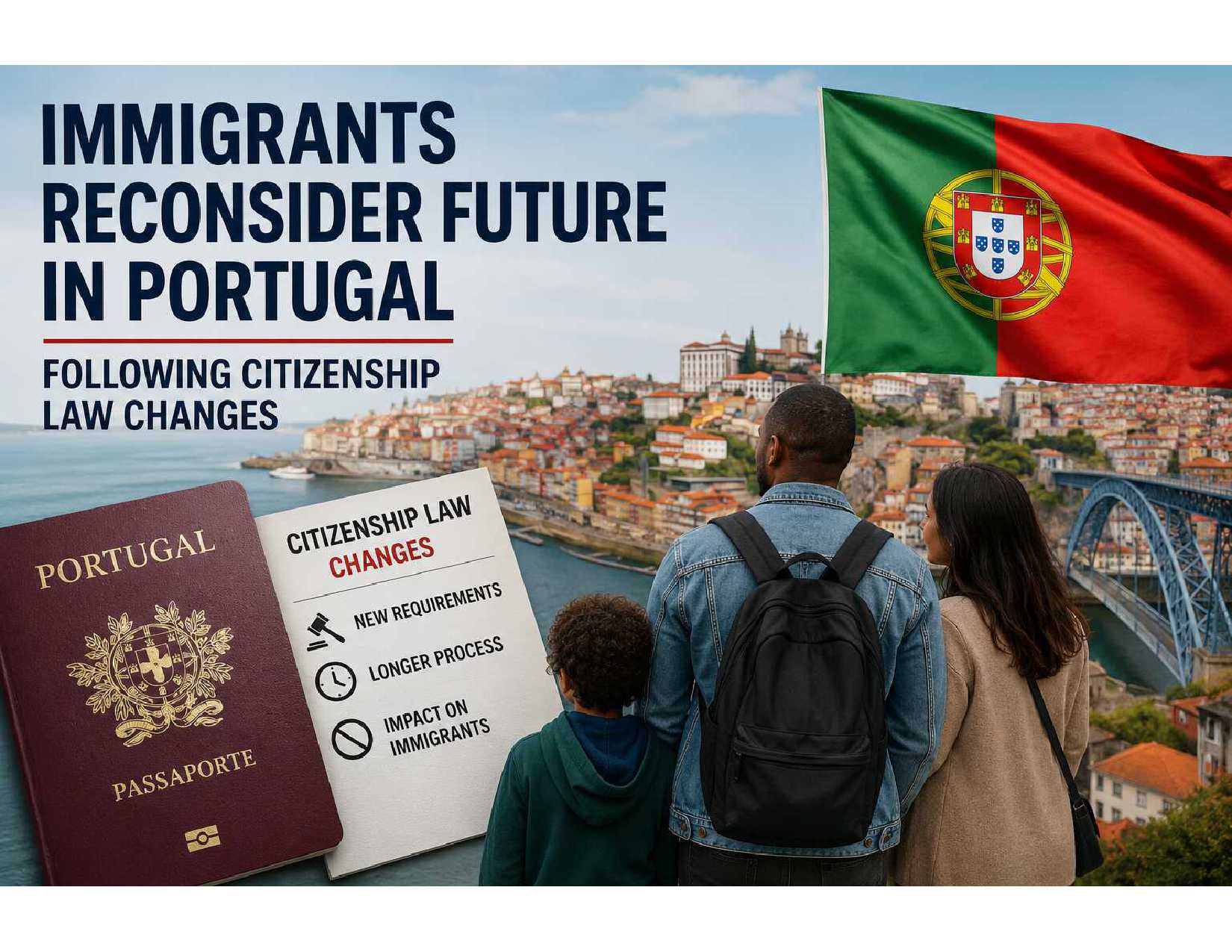
Lisbon, Portugal – Portugal's recent nationality law reforms have sparked concern among immigrant communities, with many foreign residents now reassessing their long-term plans in the country.
The new legislation, approved in 2026, significantly extends the period of legal residence required for citizenship. While most immigrants previously became eligible to apply for Portuguese nationality after five years of legal residence, the new rules increase the requirement to ten years for most foreign nationals and seven years for citizens of European Union and Portuguese-speaking countries (CPLP). Additionally, the residence period will now be counted from the issuance of the residence permit rather than the date of application. This change has generated uncertainty among thousands of residents who had expected to qualify under the previous system.
For many immigrants, Portuguese citizenship represented more than a passport. It offered long-term security, freedom of movement within the European Union, and a sense of belonging in a country they had chosen as their home. The revised law has altered those expectations, prompting some residents to explore opportunities in other European countries with shorter or more predictable naturalization pathways.
Immigration lawyers and consultants report a surge in inquiries from foreign residents seeking clarification on how the new rules will affect their eligibility. Many individuals who relocated to Portugal based on the previous five-year pathway now face the prospect of waiting several additional years before becoming eligible for citizenship.
The impact is particularly significant for skilled professionals, entrepreneurs, retirees, and digital nomads who viewed Portugal as an attractive destination due to its relatively accessible route to European Union citizenship. Some investors and highly qualified workers are reportedly evaluating alternative residency programs elsewhere in Europe as they reconsider their long-term plans.
Business groups have also expressed concerns about the potential economic consequences. Portugal has relied heavily on immigration to address labor shortages in sectors such as tourism, construction, agriculture, healthcare, and technology. Experts warn that policy changes perceived as restrictive could affect the country's ability to attract and retain international talent.
At the same time, supporters of the reform argue that citizenship should reflect a deeper and longer connection to Portuguese society. They maintain that the new requirements encourage stronger integration and ensure that citizenship is granted to individuals with a sustained commitment to the country.
Despite the uncertainty, many immigrants continue to view Portugal positively and intend to remain in the country. Permanent residence options remain available after five years of legal residence, offering a degree of security even for those facing a longer path to citizenship.
As Portugal seeks to balance immigration management, social integration, and economic growth, the long-term effects of the nationality law reform will likely become clearer in the coming years. For now, the debate continues, with immigrants, policymakers, employers, and legal experts closely watching how the new rules shape Portugal's attractiveness as a destination for global talent.
Key Points
- Citizenship eligibility has increased from 5 years to 7 or 10 years depending on nationality.
- Residence time is now counted from the issuance of the residence permit.
- Some immigrants are reconsidering long-term settlement plans.
- Employers fear potential impacts on talent attraction and retention.
- Permanent residence remains available after five years of legal residence.
- The reforms have intensified debate about immigration, integration, and Portugal's economic future.
The article is based on the documented nationality-law changes and reactions reported by immigration law and mobility experts.
Related Insights
You might also find these interesting
Portugal Allows Nearly 2,000 Nepalis to Apply for Temporary Residence Permits
Read More
Portugal Immigration Policy: Opportunities for Work, Settlement, and Retirement, Not Just Mobility
Read More
Immigrants Reconsider Future in Portugal Following Citizenship Law Changes
Read More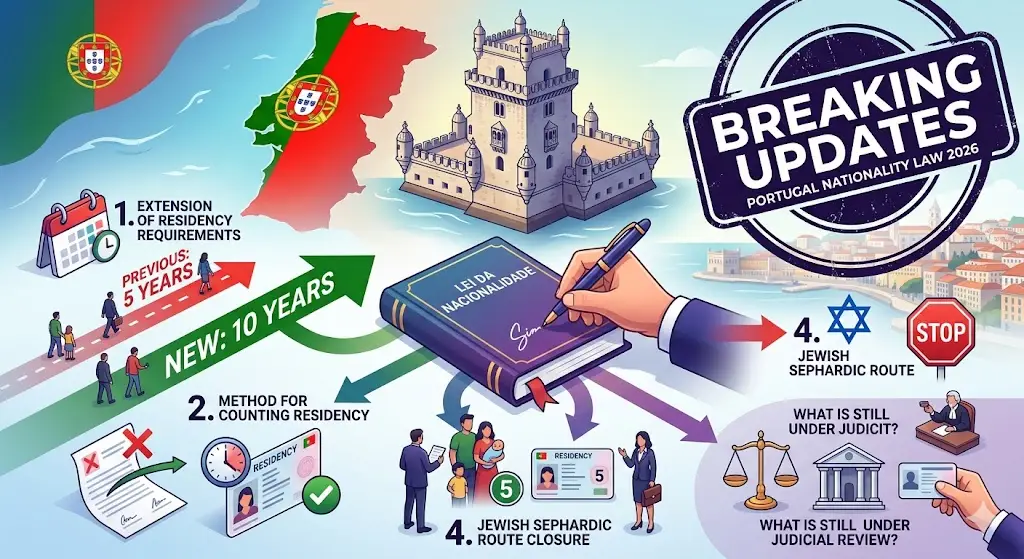
Understanding Portugal's Immigration Laws in 2026: What Every Immigrant Should Know
Read More
Cristiano Ronaldo Leads Portugal's 2026 World Cup Dream as Nation Rallies Behind the Seleção
Read More
Portugal Faces Nationwide Debate as Labor Reform Triggers General Strikes and Transport Disruptions
Read More

Portugal’s Digital Nomad Pathway: The Next Opportunity to Work, Live, and Retire in Europe
Read More
Could Portugal's Economy Face Severe Strain from Future National Policy Changes?
Read More