
Key Changes to the Nationality Law of Portugal
Key Changes to the Nationality Law of Portugal
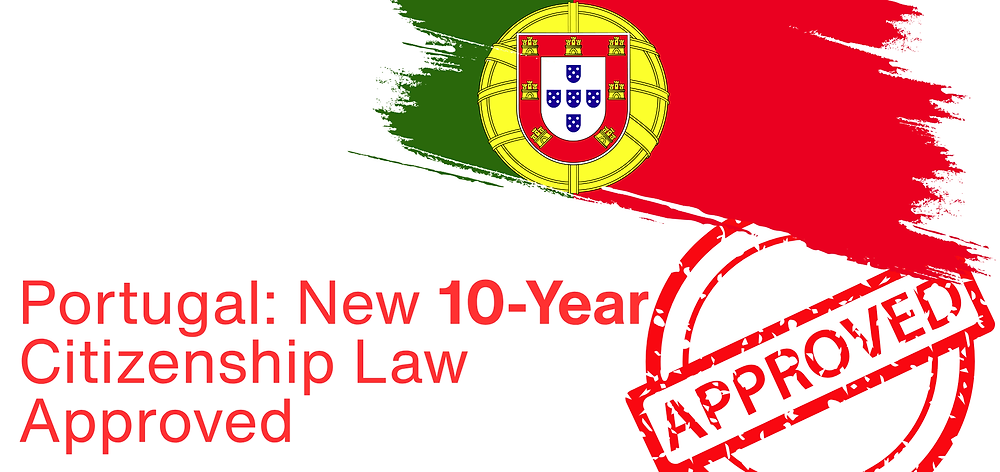
Key Changes to Portugal’s Nationality Law: What Applicants Need to Know in 2026
Portugal has long been regarded as one of Europe’s most accessible jurisdictions for acquiring citizenship through naturalization. However, recent reforms to the Portuguese Nationality Law have significantly altered the path to citizenship, introducing stricter eligibility requirements and longer residency periods for many applicants.
The amendments, enacted through Organic Law No. 1/2026, represent one of the most substantial changes to Portuguese nationality legislation in recent decades. These reforms affect foreign residents, investors, descendants of Portuguese nationals, and future applicants seeking Portuguese citizenship.
1. Increased Residency Requirements for Naturalization
One of the most significant changes concerns the minimum period of legal residence required before applying for Portuguese citizenship.
Under the previous framework, most foreign nationals could apply for citizenship after five years of legal residence. The new law extends this requirement as follows:
- 7 years of legal residence for citizens of Portuguese-speaking countries (CPLP) and European Union Member States.
- 10 years of legal residence for citizens of other countries.
This change substantially lengthens the timeline for individuals seeking Portuguese nationality through naturalization.
2. New Method for Calculating Residence Periods
The law also changes how the qualifying residence period is calculated.
Previously, residency time could, in certain circumstances, be counted from the date of submission of a residence application. Under the new framework, the qualifying period generally begins only when legal residence status has been formally granted by the Portuguese authorities.
For many applicants, particularly those who experienced administrative delays, this change may result in a longer wait before becoming eligible for citizenship.
3. Introduction of Integration and Civic Knowledge Requirements
Applicants for naturalization must now demonstrate a deeper level of integration into Portuguese society.
New requirements may include proving knowledge of:
- The Portuguese language;
- Portuguese culture and history;
- National symbols;
- Fundamental rights and duties of citizens;
- The political and constitutional organization of the Portuguese State;
- Democratic principles and values.
These measures reflect a policy shift toward evaluating not only residence duration but also social and civic integration.
4. Stricter Eligibility and Security Screening
The revised law introduces additional scrutiny regarding criminal records and national security considerations.
Applications may be denied where applicants:
- Have been convicted of certain serious criminal offenses;
- Pose a threat to national security or public order;
Are subject to international sanctions or restrictive measures adopted by the European Union or the United Nations.
The reforms reinforce the government's focus on ensuring that citizenship is granted only to applicants who meet enhanced standards of conduct and integration.
5. Changes Affecting Citizenship by Descent
The amendments also impact several nationality pathways based on ancestry.
Notable changes include:
- Restricting certain citizenship rights to descendants up to the great-grandchild generation;
- Eliminating some nationality routes previously available to more distant descendants;
- Introducing additional residency and integration requirements for certain descendants seeking citizenship.
- Individuals pursuing Portuguese nationality through family connections should carefully review their eligibility under the revised legislation.
6. End of the Sephardic Jewish Descendant Route
One of the most publicized changes is the elimination of the nationality pathway previously available to descendants of Sephardic Jews.
For several years, Portugal allowed eligible Sephardic descendants to apply for citizenship based on historical ties to the country. The revised law removes this route for future applicants, marking the end of a program that attracted significant international interest.
7. Impact on Foreign Residents and Investors
The reforms are particularly relevant for:
- Holders of residence permits;
- Digital nomads;
- Skilled workers;
- Family reunification applicants;
- Golden Visa investors.
Although Portuguese citizenship remains attainable, applicants should now expect a longer and more structured process focused on residency, integration, and compliance with legal requirements.
Transitional Considerations
The practical application of the new rules may vary depending on the applicant's individual circumstances, the date of application, and any transitional provisions that may apply. Individuals currently pursuing citizenship or planning long-term residence in Portugal should seek professional legal advice to assess how the changes affect their specific case.
Conclusion
Portugal’s nationality reform marks a significant shift from a relatively accessible citizenship framework toward a more restrictive and integration-focused model. Longer residency requirements, enhanced civic knowledge obligations, stricter eligibility standards, and the removal of certain nationality routes will reshape the citizenship landscape for years to come.
While Portugal remains an attractive destination for international residents and investors, prospective applicants should carefully plan their immigration and citizenship strategies in light of these legislative changes.
Disclaimer: This article is intended for informational purposes only and does not constitute legal advice. Immigration and nationality laws are subject to change, and applicants should consult a qualified legal professional regarding their individual circumstances.
The article is based on the 2026 amendments to Portugal's Nationality Law and recent legislative developments.
Related Insights
You might also find these interesting
Portugal Allows Nearly 2,000 Nepalis to Apply for Temporary Residence Permits
Read More
Portugal Immigration Policy: Opportunities for Work, Settlement, and Retirement, Not Just Mobility
Read More
Immigrants Reconsider Future in Portugal Following Citizenship Law Changes
Read More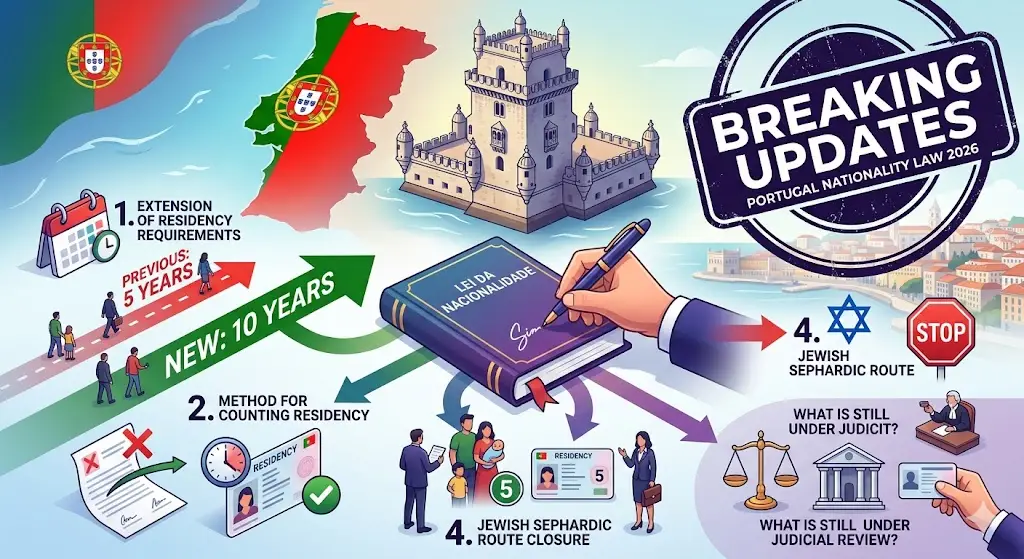
Understanding Portugal's Immigration Laws in 2026: What Every Immigrant Should Know
Read More
Cristiano Ronaldo Leads Portugal's 2026 World Cup Dream as Nation Rallies Behind the Seleção
Read More
Portugal Faces Nationwide Debate as Labor Reform Triggers General Strikes and Transport Disruptions
Read More

Portugal’s Digital Nomad Pathway: The Next Opportunity to Work, Live, and Retire in Europe
Read More
Could Portugal's Economy Face Severe Strain from Future National Policy Changes?
Read More